
Gun customization: parts and stats
Four part slots and ten stats, but two decide builds: charge speed buys you clean conversions and weight limits decide whether a character can carry them.
Guns in Resonance of Fate are not loot. You keep the same frames for most of the game and rebuild them with parts, which means the interesting decisions are about weight, charge speed and how many things you can bolt onto one gun before the character cannot carry it.
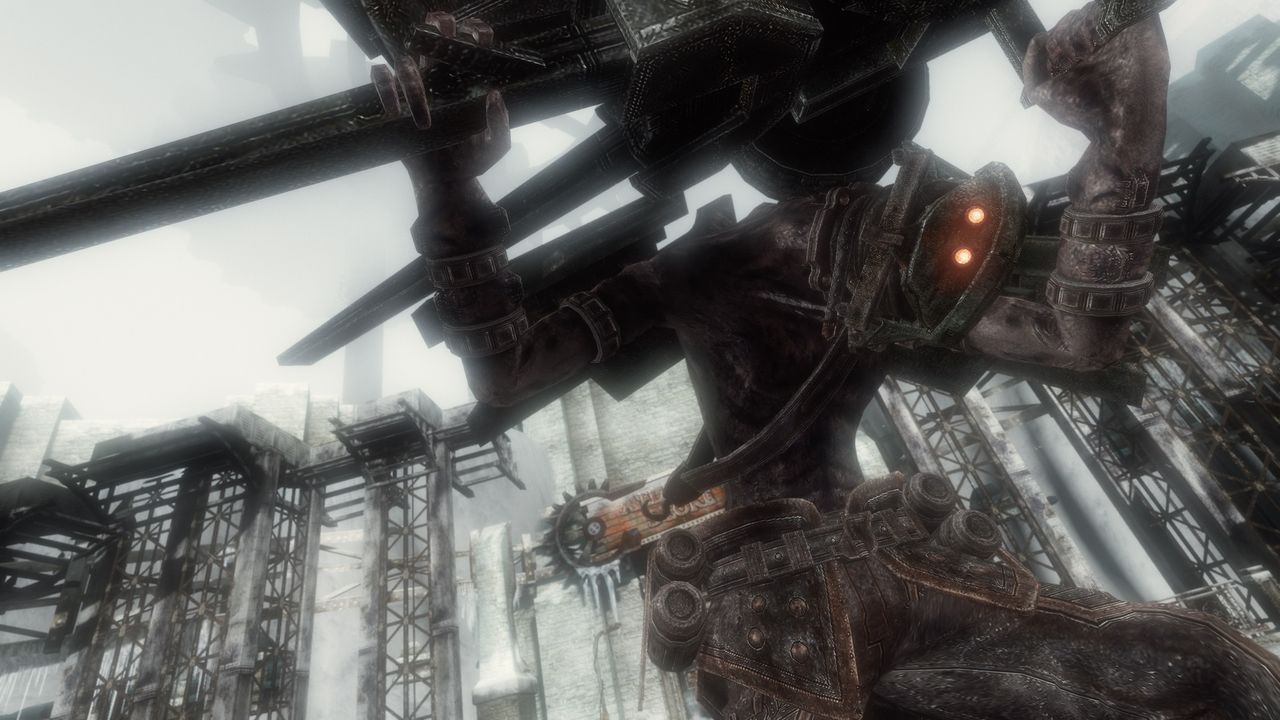
The four part slots
| Slot | What it changes | Notes |
|---|---|---|
| Barrel | Base attack and behaviour of the shot | The part that decides what the gun is for |
| Sight | Charge speed and bullet focus | Cheap sights trade weight for charge speed |
| Grip | Handling and what else can be attached | Some grips open extra mount points |
| Magazine | Rounds fired per attack | Interacts with rate of fire and reload windows |
Parts are bought, found in gold boxes, or handed out as side-mission rewards. A sight that costs 3,000 rubies is a real early-game purchase; the same sight as a mission reward is free.
What the stat abbreviations mean
The community weapon tables use ten columns, and the same abbreviations appear on parts:
| Abbreviation | Meaning |
|---|---|
| AP | Attack power per bullet or item use |
| GB | Gauge break: ability to break HP gauges |
| KB | Knockback |
| CS | Charge speed |
| CA | Charge acceleration, the multiple-charge bonus |
| RoF | Rate of fire in critical condition |
| BF | Bullet focus, concentration on the target's centre |
| MS | Magazine size, rounds fired at once |
| WG | Weight of the equipped item |
Two of these decide most builds. CS is how fast the shot is ready, which is the difference between a clean conversion and eating a counterattack. WG is the tax: weight limits are per character and rise with level, so a heavy barrel plus a heavy sight can push a character over the limit and force a lighter loadout.
The weight curve is the real progression system
Weight limits rise steadily to character level 41, then jump by roughly half again between 41 and 70, and flatten after that. That middle window is where dual-wielding two guns becomes practical for the whole party, and it is the reason chapter 6 suddenly feels different: the game tells you that you can now carry two guns, and the characters who can actually do it are the ones past that level band.
If a character cannot equip a second gun yet, the answer is usually levels, not a better part.
Building for the two damage types
- Machine guns want scratch output and rate of fire. Their gauge break is zero on every SMG in the game, so they are not the tool for breaking defences.
- Handguns want conversion. They carry the gauge break values, they convert stored scratch into direct damage, and their attack power is what decides whether the conversion finishes the job.
- Grenades are the third option. They deal direct damage without a gun slot, but ammo is limited and they need a Grenade Box equipped.
A workable mid-game setup is one machine gun and one handgun per character once weight allows, with the machine gun building scratch and the handgun cashing it. Which character carries which is covered on character builds.
Where to get better parts
- Shops. Ebel City and later Albona sell the mid-tier parts; prices run from a few thousand to six figures in rubies.
- Side missions. Several pay a specific custom part as the reward, which is cheaper than buying it.
- Arena rewards and gold boxes. The late-game parts sit in Neverland and in the Arena ranks that unlock as chapters advance.
- Synthesis. Materials such as the Scrapped Missile family feed item synthesis, covered on scrapped missile farming.
Stat definitions: community weapon tables derived from the in-game status screen; part slots and chapter availability from the custom parts documentation; checked 2026-10-31.